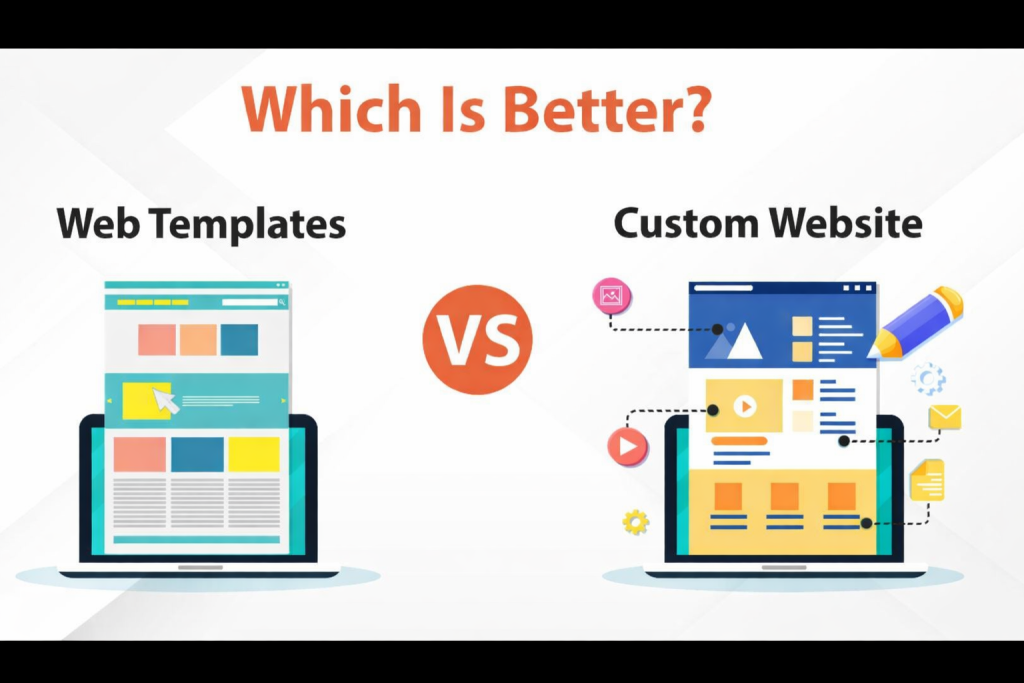

Custom Website vs Template Website: Which One Is Better for Your Business?
February 18, 2026
AI in Digital Marketing for SMEs: Smarter Growth Strategies
May 19, 2026
From Traffic to Revenue: Building an AI-Led Growth System That Actually Converts in 2026
The Silent Problem Slowing Digital Growth in 2026
Most businesses don’t have a traffic problem.
They have a conversion system problem.
Brands are pouring budgets into ads, SEO, and social media—yet pipelines remain inconsistent, CAC keeps rising, and marketing feels uncertain rather than structured.
Here’s the reality:
Digital marketing isn’t failing. Your growth architecture needs refinement.
And that’s exactly where forward-thinking companies are shifting focus—away from campaigns and toward AI-led revenue systems.
The Shift Nobody Is Talking About (Yet)
While everyone is still debating ad creatives and SEO hacks, a quieter shift is happening:
👉 Businesses are moving from channel-based marketing to system-based growth
This means:
- No more isolated campaigns
- No more manual lead handling
- Less guesswork in decision-making
Instead, companies are building integrated ecosystems powered by AI-driven marketing services, automation, and real-time data loops.
This is where early adopters are gaining a strong competitive edge.
What Is an AI-Led Growth System?
An AI-led growth system is not a tool—it’s an architecture.
It connects:
- Traffic acquisition
- User behavior tracking
- Automated engagement
- Conversion optimization
- Retention loops
All working together in real time.
Unlike traditional setups, this system doesn’t just generate leads—it qualifies, nurtures, and converts them efficiently.
Why Most “Marketing Automation” Falls Short
Let’s address a major gap in the market.
Many businesses invest in a marketing automation agency, yet see limited ROI.
Why?
Because automation is often implemented like this:
- Basic email sequences
- Generic CRM tagging
- Disconnected tools
That’s not true automation—it’s fragmented execution.
Real automation requires:
- Behavioral triggers (not time-based messaging)
- AI scoring of leads
- Cross-channel synchronization
- Continuous learning loops
Appartus Solutions approaches automation as a conversion infrastructure, not just a workflow tool.
Data-Driven Marketing Isn’t About Data—It’s About Decisions
“Data-driven marketing” has become a buzzword—but many companies are overwhelmed with dashboards without clear direction.
The real differentiator in 2026 is:
👉 Decision velocity powered by data
High-performing brands:
- Identify winning campaigns quickly
- Reallocate budgets dynamically
- Personalize user journeys effectively
This is where AI-driven marketing services outperform manual-only strategies—because decisions happen faster and with greater accuracy.
The Rise of Performance-Based Growth Models
Another underutilized shift:
Businesses are moving toward performance-based marketing models internally—not just with agencies.
This means:
- Every campaign tied to measurable revenue
- Every funnel stage optimized for ROI
- Every channel accountable
But this approach works best when:
- Tracking is accurate
- Funnels are optimized
- Data flows seamlessly
Without that foundation, performance insights lose their effectiveness.
Omnichannel Is Evolving Into Synced Journeys
“Omnichannel digital marketing” is widely used—but often misunderstood.
Being present on multiple platforms ≠ omnichannel.
The real evolution in 2026 is:
👉 Synced customer journeys
This means:
- A user clicks an ad → website adapts dynamically
- Leaves without converting → retargeting adjusts messaging
- Opens email → content reflects previous behavior
- Visits again → offer changes based on intent
Everything is connected.
Everything adapts.
That’s true omnichannel—and still an emerging advantage.
Growth Marketing Agency vs Traditional Agency: The Real Difference
A typical agency focuses on:
- Campaign execution
- Creative delivery
- Reporting metrics
A true growth marketing agency focuses on:
- System design
- Funnel engineering
- Revenue predictability
- Continuous experimentation
The difference may seem subtle—but the impact is significant.
The Hidden Opportunity for Brands Right Now
Here’s where things get interesting—and where many competitors are not fully focused:
Current gap:
- Businesses have tools but lack integration
- Data exists but isn’t fully utilized
- Traffic comes in but doesn’t convert consistently
Opportunity:
Build lean, AI-powered growth systems before it becomes mainstream
Right now, this approach is:
- Emerging among high-growth startups
- Adopted by top-performing digital-first brands
- Still underutilized by traditional businesses
Which means:
👉 Early adopters can build strong market positioning
Where Appartus Solutions Fits In
Instead of offering disconnected services, Appartus Solutions focuses on building:
- Conversion-focused websites (not just design)
- Scalable app ecosystems
- AI-integrated marketing systems
- Automation pipelines that improve conversions
The goal isn’t more traffic.
It’s predictable, scalable growth.
Final Thought: Stop Marketing, Start Engineering Growth
The brands succeeding in 2026 aren’t louder.
They’re more structured and strategic.
They’ve moved beyond:
- Vanity metrics
- Random campaigns
- Short-term spikes
And are focusing on:
- Systems
- Feedback loops
- AI-driven decision frameworks
If your marketing feels inconsistent, the issue isn’t effort—it’s structure.
Refine the system, and growth becomes more predictable.
FAQs
1What are AI-driven marketing services?
AI-driven marketing services use machine learning and automation to analyze customer behavior, optimize campaigns in real time, and improve conversion rates with minimal manual intervention.
2How is a growth marketing agency different from a traditional agency?
A growth marketing agency focuses on building scalable systems, optimizing funnels, and driving long-term revenue, while traditional agencies often focus mainly on campaign execution.
3What is data-driven marketing in simple terms?
Data-driven marketing means making marketing decisions based on real customer data, behavior insights, and performance metrics rather than assumptions.
4Why is marketing automation important in 2026?
Marketing automation helps businesses scale personalized communication, reduce manual effort, and ensure no potential lead is missed during the customer journey.
5What is performance-based marketing?
Performance-based marketing is a strategy where businesses pay for measurable results like leads, conversions, or sales instead of just visibility.
6What does omnichannel digital marketing really mean today?
Modern omnichannel marketing means creating a seamless and connected user experience across all platforms, where each interaction adapts based on previous behavior.
7How can businesses improve conversion rates without increasing traffic?
By optimizing funnels, using AI-driven insights, implementing automation, and improving user experience, businesses can convert more of their existing traffic into customers.